11 Months Does NOT Mean “No Registration”: The Real Truth About Rent Agreements in India
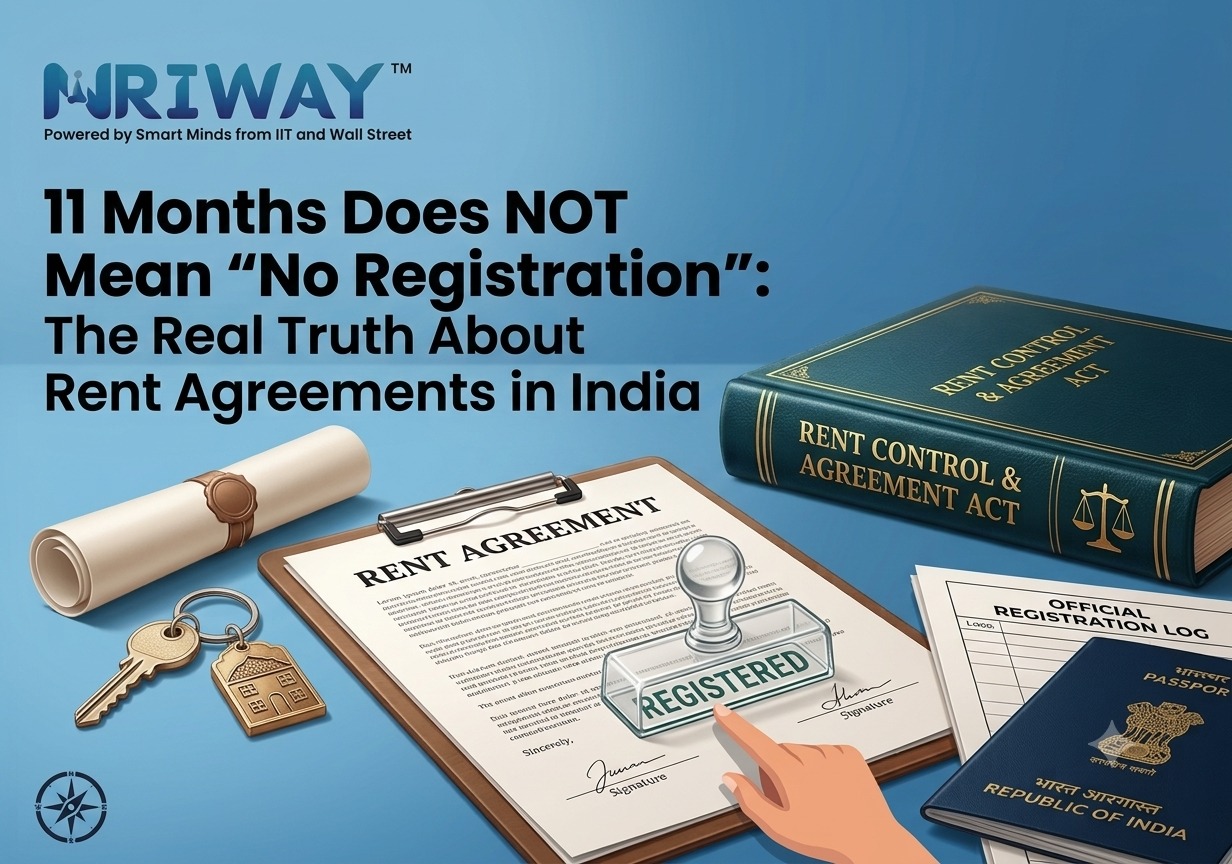
“It’s only an 11-month agreement. We don’t need registration.”
This sentence has become almost a standard practice in the Indian rental market.
But there is a problem:
An 11-month duration is a contractual choice not a universal legal exemption.
Whether a Rent Agreement must be registered, notarised, digitally executed or completed through another prescribed process depends on the applicable state law, nature of the arrangement and circumstances of the transaction.
So before a landlord hands over the keys, or a tenant transfers the deposit, the better question is:
“What does the law applicable to this property require?”
The 11-Month Myth Explained
An 11-month rental agreement is commonly used because it offers flexibility to both parties.
But many people incorrectly treat the number 11 as a legal shortcut.
There is no universal Indian rule saying:
11 months = no registration
The legal position can differ from one state to another.
For a property in Pune, Maharashtra, for example, the Maharashtra Rent Control Act, 1999 contains a specific provision concerning agreements for leave and licence or letting of premises.
Therefore, the location of the property matters.
Not where the landlord lives.
Not where the tenant works.
The property and the applicable legal framework matter.
Maharashtra: Why Pune Owners Should Be Careful
Section 55 of the Maharashtra Rent Control Act, 1999 provides that an agreement for leave and licence or letting of premises must be in writing and registered. The provision also places the responsibility for getting the agreement registered on the landlord.
This makes it particularly important for property owners and tenants in Pune and PCMC not to rely solely on the popular “11-month rule.”
The practical takeaway:
Don't decide the registration process based only on the duration.
Check the law applicable to the property.
Registration or Notarisation?
This is another area where landlords and tenants frequently get confused.
NOTARISATION
Notarisation involves a notarial act relating to the execution/authentication of a document.
REGISTRATION
Registration is a statutory process under the applicable registration framework.
THEY ARE NOT AUTOMATICALLY THE SAME.
A notarised document should not automatically be assumed to satisfy a statutory requirement for registration where registration is mandatory.
So when someone says:
“Just notarise it. It's only 11 months.”
The professional response should be:
“First check whether registration is legally required.”
India Is Not One Single Rental-Agreement Market
This is where a national rental strategy often goes wrong.
A process followed in Pune should not automatically be copied for a property in Bengaluru, Hyderabad, Delhi, Mumbai, Chennai or Kolkata.
Different states can have different rules and procedures concerning:
Stamp duty
Registration
E-registration
Physical appearance
Biometric requirements
Notarial formalities
Documentation
Identity verification
Execution procedures
One country does not necessarily mean one rental-documentation procedure.
State-specific compliance matters.
The Agreement Is More Than Rent + Deposit
A professionally prepared rental agreement should answer the questions that usually arise after the keys are handed over.
For example:
Rent
How much?
When is it payable?
How can it be paid?
Security Deposit
How much was received?
Under what circumstances can deductions be made?
How and when is it to be returned or adjusted?
Lock-in
Is there a lock-in period?
What happens if either party exits during it?
Notice
How much notice is required?
How must notice be given?
Maintenance
Who pays routine maintenance?
Who handles major repairs?
Utilities
Who pays electricity, water, gas, internet and other charges?
Damage
What constitutes tenant-caused damage?
How will responsibility be determined?
Termination
Under what circumstances can the arrangement end?
Handover
What condition must the property be returned in?
If the answer matters, put it in writing.
The “Before the Keys” Principle
Here is a simple way to think about rental documentation:
Before the Keys → Establish the Rules
During the Tenancy → Follow the Rules
At Exit → Verify the Rules
This is why professional rental management should not stop with agreement preparation.
Entry Audit: Your Property's “Day One” Record
Imagine an owner hands over a furnished apartment.
The property already has:
Minor wall marks
A scratch on a cupboard
Existing appliance wear
Furniture damage
Meter readings
Missing accessories
Six months later, the tenant vacates.
The owner asks:
“Who caused this?”
The tenant responds:
“It was already there.”
Now begins the disagreement.
An Entry Audit creates a documented record of the property's condition at the beginning of occupancy.
It can include appropriate photographs, fixtures, appliances, inventory and relevant observations.
Think of it as:
Property Condition — Day One
rather than trying to reconstruct the condition six months later.
Exit Audit: Closing the Rental Cycle
When a tenant vacates, collecting the keys is not the entire handover.
A professional exit process can include checking:
Property condition
Fixtures & fittings
Appliances
Inventory
Meter readings
Keys/access cards
Visible damage
Outstanding dues
Handover observations
The objective is not to automatically blame either party.
The objective is documentation.
For Landlords: Your Property Is an Asset
A landlord may have invested years of savings into a property.
Yet the rental process is sometimes handled casually:
Downloaded agreement → WhatsApp confirmation → Deposit → Keys
That approach can leave important matters undocumented.
A professional rental process should instead be:
Verify → Agree → Document → Register Where Required → Audit → Handover
For Tenants: Don't Sign Blindly
Tenants should also protect themselves.
Before signing, verify:
Who is authorised to rent the property?
Is the property description correct?
Is the rent correctly stated?
Is the deposit clearly recorded?
What is the notice period?
Is there a lock-in?
Who pays maintenance?
Who handles repairs?
What are the termination conditions?
What is the procedure for deposit settlement?
Is the property's existing condition documented?
A good agreement should create clarity for both sides.
It is not a document designed only to protect the landlord.
A Special Word for NRI Property Owners
For an NRI landlord, the distance between the owner and the property can create additional operational challenges.
The owner may be in:
USA | Canada | UK | UAE | Australia | Singapore
while the property is in:
Pune | Mumbai | Bengaluru | Hyderabad | Delhi | Chennai
Questions immediately arise:
Who will coordinate with the tenant?
Who will manage documentation?
Who will inspect the property?
Who will handle handover?
Is an authorised representative involved?
Is a Power of Attorney relevant to the transaction?
These matters should be examined according to the specific circumstances and applicable law.
For an NRI owner:
Being abroad should not mean being uninformed about your Indian property.
The 60-Second Landlord Checklist
Before giving possession, ask yourself:
Is the tenant properly identified?
Are the rent and deposit clearly documented?
Is the agreement period clear?
Is the notice period clear?
Is the lock-in clearly stated, if applicable?
Are maintenance responsibilities defined?
Are repair responsibilities defined?
Are termination conditions clear?
Have applicable stamp-duty requirements been checked?
Has the applicable registration requirement been checked?
Is the property's entry condition documented?
Are keys, access cards and inventory recorded?
If you cannot confidently answer these questions, pause before handing over the keys.
The 11-Month Rule You Should Actually Remember
Forget:
“11 months means no registration.”
Remember:
“Check the law applicable to the property before deciding how the agreement should be executed.”
That one change in thinking can prevent a surprisingly common documentation mistake.
Agreement4U: More Than Just an Agreement
At Agreement4U, the focus is not simply on putting names, rent and deposit into a document.
The objective is to make the rental process clear, structured and professionally documented.
Rental Agreement
Clear contractual documentation.
Registration Support
Assistance with the applicable registration process.
Tenant Sourcing
Support for owners looking for suitable tenants.
Entry Audit
Document the property's condition before possession.
Exit Audit
Document the property's condition at handover.
Because a Rental Relationship Has Two Sides
The landlord wants protection.
The tenant wants clarity.
Both need documentation.
And the strongest rental arrangement is not the one with the most complicated language.
It is the one where both parties understand exactly what they have agreed to.
Agreement4U
Don't Just Rent It. Document It.
Rental Agreement | Registration Support | Tenant Sourcing | Entry & Exit Audit
For Indian Owners, Tenants & NRI Property Owners
Legal Disclaimer: This article is intended for general educational and awareness purposes and does not constitute legal advice. Stamp duty, registration, notarisation, execution, verification, taxation, tenancy/licence and Power of Attorney requirements may vary depending on the state, property, parties and nature of the transaction. Current applicable laws and government procedures should be verified before execution. For specific legal circumstances, consult a qualified legal professional.
This version gives Agreement4U a stronger authority position: rather than competing on “cheap rent agreements,” it positions the brand around clarity, compliance and the complete rental lifecycle.
Related Posts



Thank You

Thank you for subscribing to our newsletter.