10 Things You Must Document Before Handing Property to a Tenant
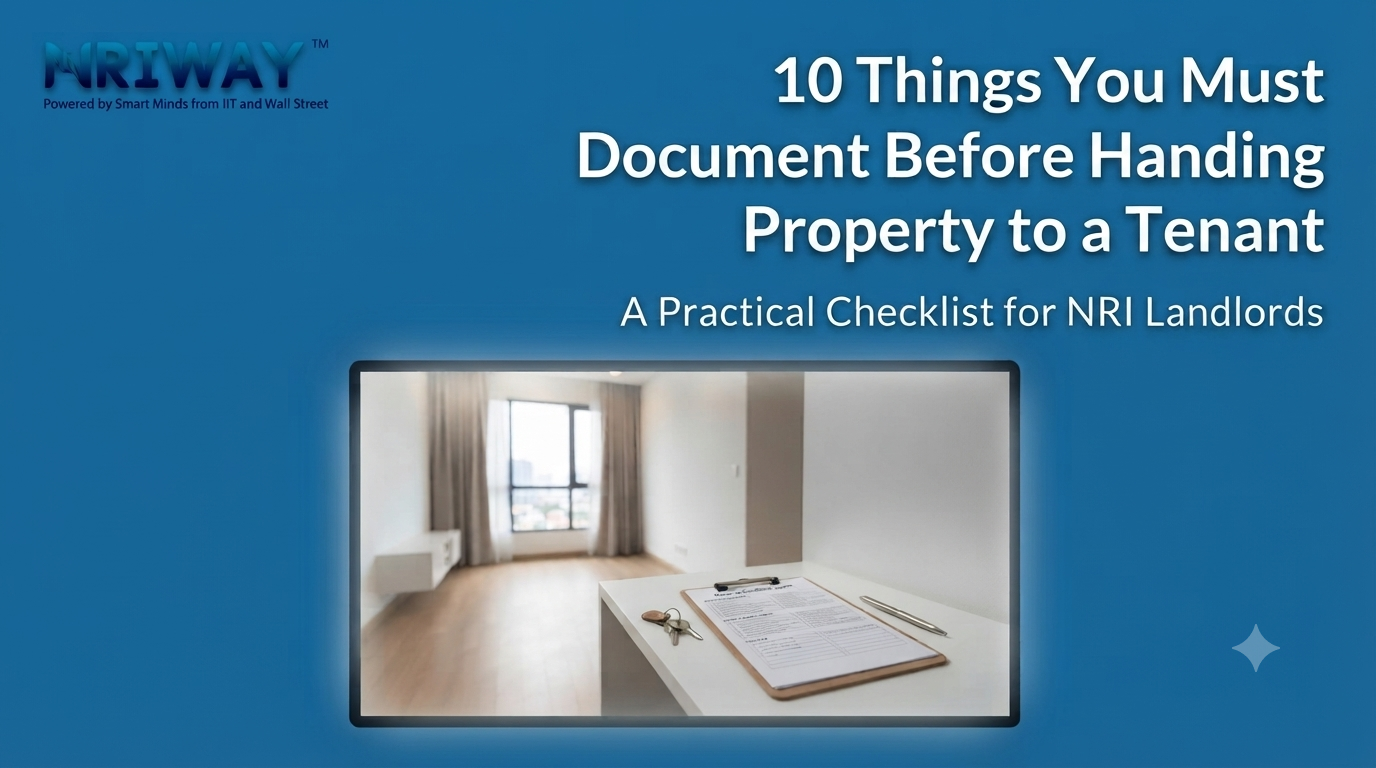
10 Things You Should Never Leave Undocumented When Giving Your Property to a Tenant
A Practical Entry Documrentation Checklist
Before handing over your property, ask yourself one question:
“If something changes six months from now, will I be able to prove what it looked like today?”
If the answer is no, you have a documentation gap.
Here are ten areas that deserve attention.
1. Walls and Paint
Record visible marks, cracks, stains, patches, paint condition and other relevant observations.
2. Flooring
Document scratches, cracks, stains or existing deterioration.
3. Doors and Windows
Check visible condition, locks, handles and related hardware.
4. Electrical Fixtures
Record the visible condition of lights, fans, switches and relevant fixtures.
5. Plumbing and Bathroom Fittings
Document the visible condition of taps, sanitary fittings and other relevant fixtures.
6. Appliances
Record the condition of appliances included with the property and relevant operational observations within the agreed scope.
7. Furniture and Inventory
List significant furniture, appliances and other items provided with the property.
8. Meter Readings
Record relevant electricity, water or other applicable readings at handover.
9. Keys and Access Devices
Record keys, remotes, access cards and other access devices.
10. Existing Defects
This is perhaps the most important category.
If something is already damaged, record it before possession.
Why Do These Ten Things Matter?
Because the question at exit is often:
“What changed?”
Without entry documentation, that question can be difficult to answer.
With documentation, the property has a baseline.
What About NRI Owners?
For NRI owners, it is especially useful to ensure that the local inspection is systematic and that the report and photographs are shared in an organised manner.
The owner may be thousands of kilometres away.
But the property record should not be.
The Best Time to Document
Not after the dispute.
Not after the tenant leaves.
Not after damage is discovered.
The best time is before possession begins.
The best time to document your property's condition is before you need the documentation.
OrangeLeaf Services
Document the condition. Protect the asset. Reduce the uncertainty.
Related Posts



Thank You

Thank you for subscribing to our newsletter.